An Uncertain Landscape
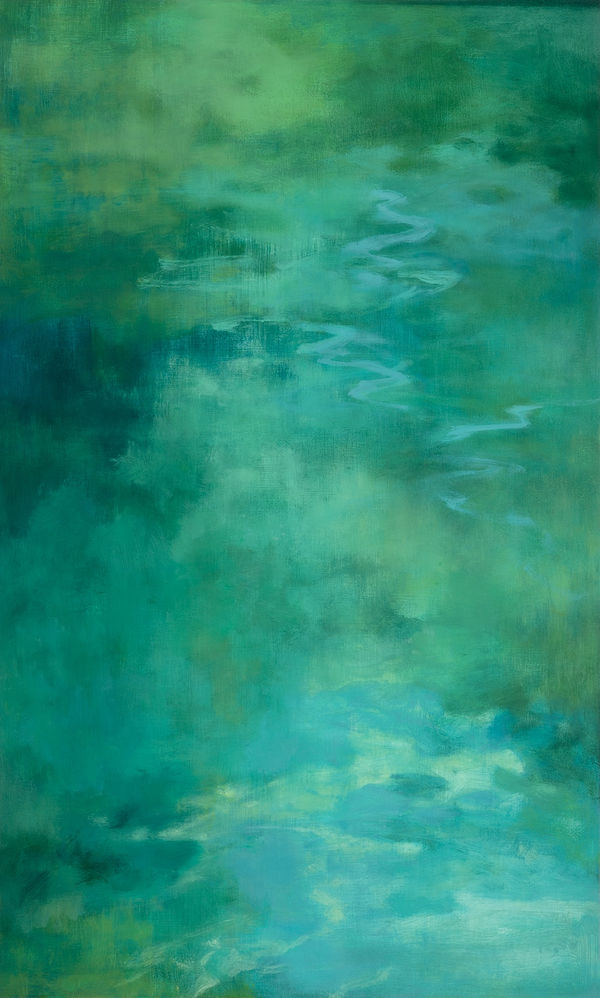
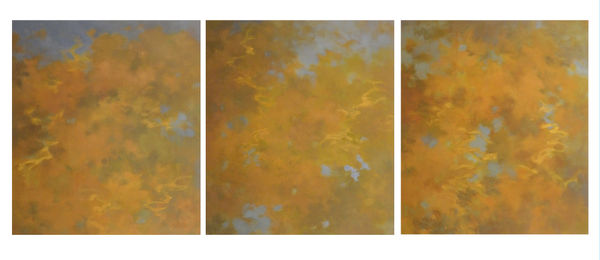
How much, or how little, do we need to see before an artwork becomes a landscape, or stops being one? Landscape has long been a subject for artists, but it doesn't always begin with a particular place or end with a recognizable view. Nancy Cohen's environmentally conscious handmade paper works are rooted in the natural world, though their flowing lines of pigmented pulp may suggest currents, roots, and organic structures without directly depicting them. Gillian Theobald's entirely imagined landscapes are immediately recognizable, yet their unexpected, vivid colors make them feel strangely unfamiliar. Arielle Zamora's linear abstractions draw on the repetition and order of architecture and the colorful fields of her flower farm, influences that aren't necessarily apparent in the finished work. Ky Anderson's layered, organic geometry draws on nature, though its references to land, wind, and sun may be felt more than seen. In Rocío Rodríguez's paintings, gestural brushstrokes and opposing warm and cool passages build across wide canvases, evoking sunsets, water, and sky. Tamar Zinn builds up layers of paint, then scrapes and sands them back, revealing subtle shifts in color and texture that suggest atmospheric space.